

Metabolic Health
Berberine
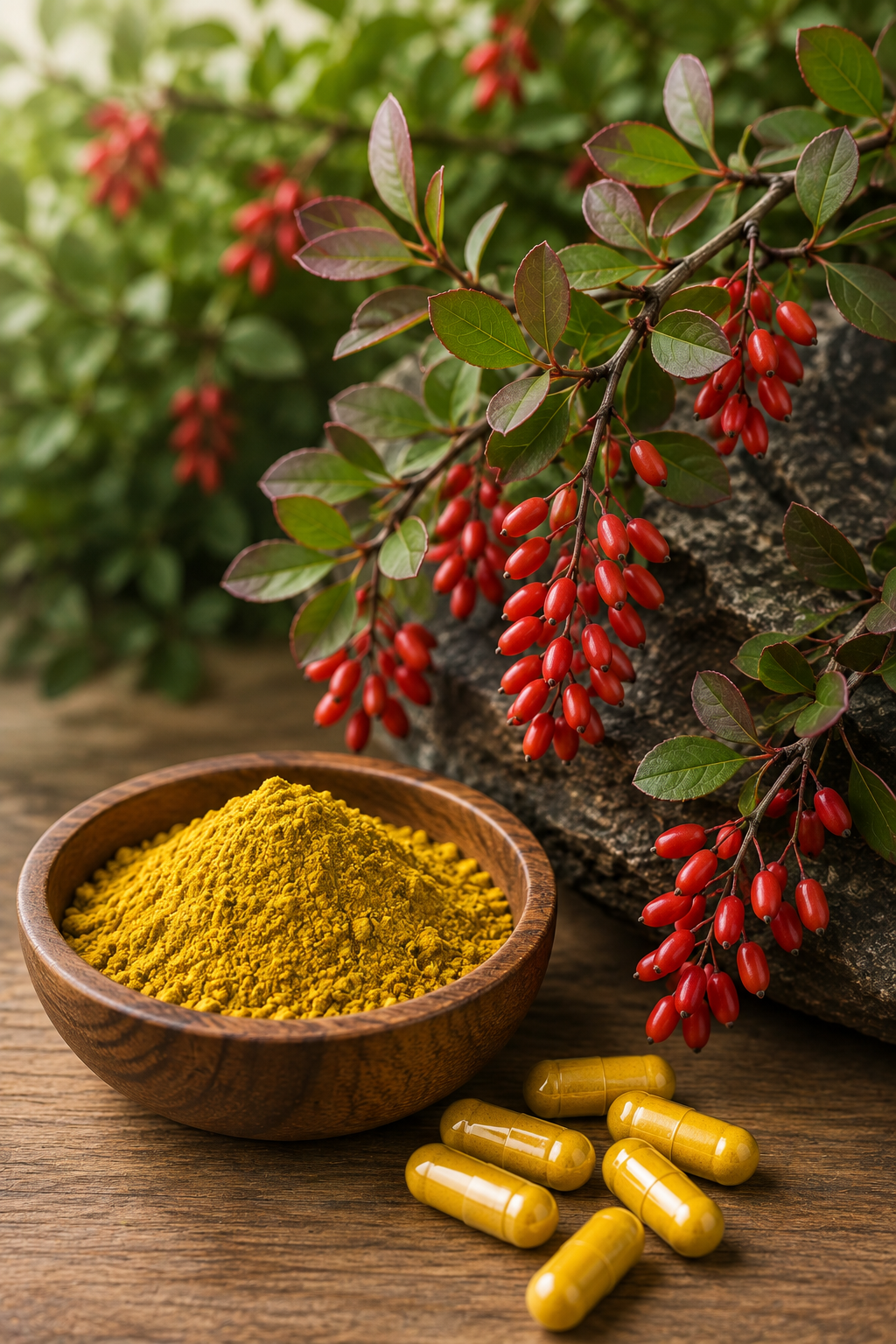
Plant-derived isoquinoline alkaloid found in species including Berberis vulgaris and Coptis chinensis
Berberine is a plant-derived alkaloid studied for metabolic health, including blood glucose, lipid metabolism and weight-related outcomes. Human evidence suggests possible modest benefit in selected populations, but the effect size is small and the evidence base remains heterogeneous.
Evidence
Promising
Clinical confidence
Moderate
Safety
Caution
Preparation reviewed
Berberine-containing supplements and standardized extracts are assessed separately from whole-plant preparations because berberine content, purity and absorption can differ.
Evidence assessment
What does the current evidence support?
Evidence limitations
Trials vary substantially in dose, formulation, duration, participant health status and comparator treatment. Many studies have been conducted in Asian populations, some have high or unclear risk of bias, and product purity and biochemical characterization are not consistently reported. The observed weight effects are modest and should not be interpreted as evidence of equivalence to licensed weight-management medicines.
Clinical confidence
Moderate
BodyRepair considers the item potentially useful, but evidence consistency, dosage clarity, safety, effect size or practical applicability may still limit confidence.
Safety assessment
Safety is assessed separately from evidence of benefit.
Current safety summary
Berberine is generally tolerated at doses used in clinical studies but commonly causes gastrointestinal adverse effects. It can interact with medicines and should not be used during pregnancy or breastfeeding or given to infants because exposure has been linked to harmful bilirubin accumulation and risk of kernicterus.
Reported or relevant adverse effects
- Nausea
- Abdominal pain or cramping
- Bloating
- Constipation
- Diarrhoea
- Vomiting
Interaction review
Drug, Supplement & Botanical Interactions
Potential interactions should be reviewed in relation to the botanical preparation, dose, frequency, prescribed medicines, supplements and individual health circumstances.
Prescription medicine
Established
Cyclosporine
Berberine has been shown to interact with cyclosporine and may alter cyclosporine exposure.
Recommended action
Do not combine berberine with cyclosporine without specialist medical and pharmacy review.
Prescription medicine
Promising
Diabetes medicines
Berberine may lower blood glucose and could add to the effects of glucose-lowering medicines.
Recommended action
People taking diabetes medicines should seek clinical advice before starting berberine and may require glucose monitoring.
General interaction review
Under Review
Other prescription medicines
Berberine may affect drug metabolism and transport pathways, so additional medicine interactions are possible.
Recommended action
Check berberine use with a pharmacist or prescriber when taking regular prescription medicines.
BodyRepair safety rule
Do not stop, replace or alter prescribed treatment because of botanical information without advice from an appropriately qualified healthcare professional.
Clinical suitability
Contraindications & Clinical Cautions
Contraindications should be considered in relation to the botanical species, preparation, dose, diagnosed conditions, age, pregnancy, breastfeeding and planned procedures.
Life stage
Pregnancy
Avoid
Clinical Practice
Berberine may be unsafe during pregnancy because of possible fetal exposure and effects on bilirubin metabolism.
Recommended action
Do not use berberine during pregnancy unless specifically directed by an appropriately qualified clinician.
Life stage
Breastfeeding
Avoid
Clinical Practice
Berberine may be unsafe during breastfeeding because of possible infant exposure.
Recommended action
Avoid berberine while breastfeeding unless specialist clinical advice indicates otherwise.
Age group
Infants
Contraindicated
Established
Berberine exposure has been linked to harmful bilirubin accumulation in infants and risk of kernicterus.
Recommended action
Do not give berberine-containing products to infants.
Clinical treatment
People using glucose-lowering medicines
Medical Supervision Required
Promising
Because berberine may reduce blood glucose, combined use may increase the risk of excessive glucose lowering.
Recommended action
Use only with professional review and appropriate monitoring.
BodyRepair clinical rule
Where pregnancy, breastfeeding, surgery, a diagnosed condition, significant symptoms or prescribed treatment are relevant, professional review should take priority over self-directed use.
BodyRepair Interpretation
What BodyRepair concludes from the current record.
Berberine is best regarded as a promising metabolic-health botanical rather than a proven substitute for licensed diabetes or weight-management treatment. Current evidence supports possible modest effects on weight, glucose regulation and lipid metabolism, but product variability, medicine interactions and study-quality limitations materially reduce certainty. BodyRepair does not support presenting berberine as a natural equivalent to GLP-1 medicines.
Living evidence record
Evidence Timeline
New studies, safety information, corrections, editorial decisions and version changes remain visible here.
Human Reviewed
Berberine upgraded to the BT-013 canonical evidence standard.
The record was expanded with quantified 2025 obesity evidence, clearer metabolic interpretation, medicine interaction cautions and formal contraindication language.
Promising
Meta-analysis reports modest reductions in body weight, BMI and waist circumference.
Promising
Review finds possible weight and BMI reductions but highlights bias and inconsistency.
NCCIH reports that a 2022 review found reductions in weight and BMI in some studies, particularly at doses above 1 gram per day and durations longer than 8 weeks, but notes inconsistent outcomes and high risk of bias.
Promising
Review suggests benefit for glucose, insulin resistance and lipid metabolism in type 2 diabetes.
A review of 46 studies involving 4,158 participants suggested beneficial effects on blood glucose, insulin resistance and lipid metabolism in people with type 2 diabetes, while also identifying important limitations in study quality and generalisability.
Safety Alert
NCCIH maintains pregnancy, breastfeeding and infant safety warnings.
NCCIH advises that berberine should not be used during pregnancy or breastfeeding and should not be given to infants because exposure has been linked to harmful bilirubin accumulation and risk of kernicterus.
Living evidence record
Evidence status may change as new research, safety information and human editorial review become available. BodyRepair records material changes rather than treating botanical evidence as permanently settled.
Human review history
Editorial accountability remains visible.
- Version
- 1.1
- Reviewed by
- BodyRepair Editorial Review
- Last reviewed
- 9 August 2026
- Next review
- 9 November 2026
- AI monitoring
- Active
- Publication authority
- Human editorial approval
Source register
Evidence sources supporting this record.
Berberine and Weight Loss: What You Need To Know
Weight-related evidence, common adverse effects, cyclosporine interaction and pregnancy, breastfeeding and infant safety guidance.
Open sourceDiabetes and Dietary Supplements: What You Need To Know
Evidence on glucose regulation, insulin resistance, lipid metabolism and general clinical safety.
Open sourceThe effect of berberine on obesity indices: a systematic review and meta-analysis
2025 quantitative evidence for body weight, BMI, waist circumference and waist-to-hip ratio.
Open sourceEffects of berberine and barberry on anthropometric measures: A systematic review and meta-analysis of randomized controlled trials
Earlier anthropometric evidence demonstrating inconsistency across weight-related outcomes.
Open sourceFuture evidence monitoring
AI can monitor evidence. Humans retain publication authority.
BodyRepair may use artificial intelligence to identify new research, safety notices, corrections and retractions relevant to this botanical.
AI-generated findings remain drafts until reviewed and approved through the BodyRepair editorial process.
BodyRepair Botanical Therapies
Continue exploring the botanical evidence library.
Return to Botanical Therapies or explore the wider Evidence Centre.